

The Cause May Be Hidden in the Opener, Door Hardware, or Safety Circuit
A garage door that starts closing and suddenly reverses can be frustrating, particularly when its safety sensors appear clean, aligned, and operational. However, photo-eye sensors are only one part of the opener’s protection system. Incorrect travel limits, mechanical resistance, wiring faults, or problems inside the opener can also interrupt a closing cycle.
Property owners experiencing this issue can explore garage door repair in Aloha OR through All About Garage Doors’ garage door repair services to address problems affecting safe, reliable door operation.
The first distinction is between a sensor-related reversal and one triggered by the opener’s internal obstruction-detection system. Photo-eye sensors monitor the space across the garage entrance, usually a few inches above the floor. The opener also monitors door movement and may reverse if it detects unusual resistance.
How Mechanical Resistance Triggers an Unexpected Reversal
An opener is designed to move a garage door smoothly along its tracks. When a component creates unusual resistance, the opener may interpret the increased effort as an obstruction and reverse the door. This can happen even when the photo-eye beam remains completely clear. In many cases, the source of resistance lies in the door assembly rather than the opener itself.
Worn garage door rollers, bent tracks, loose hinges, or damaged panels can interfere with smooth movement. A broken drum roller or a damaged cable can also affect how the door travels, particularly if the door begins moving unevenly. A deteriorated garage door weather seal may catch against the floor or create resistance near the end of the closing cycle. A squeaky noise can accompany friction, but noise alone does not establish which component is responsible.
Spring problems require particular care. Garage door springs counterbalance the door’s weight, allowing the opener to move it without carrying the entire load. A weakened, broken, or incorrectly matched spring can make the door harder to operate and trigger the opener’s resistance response. Garage door spring repair should be left to trained technicians because springs and connected cables store substantial mechanical energy. Homeowners should not attempt spring adjustments or cable repositioning.
What Garage Door Safety Sensors Actually Detect
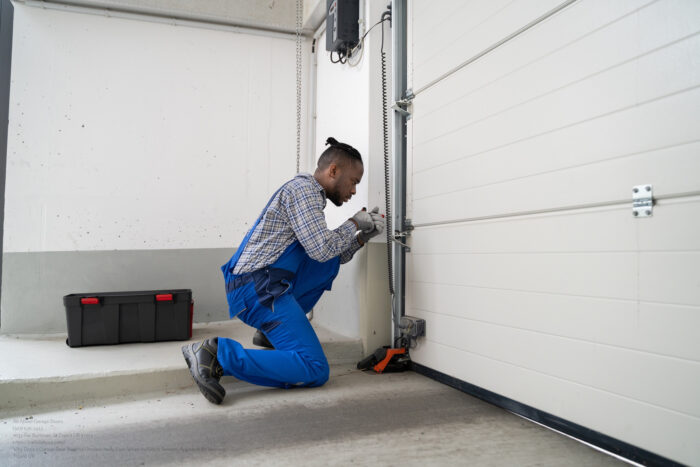
Garage door safety beams, also known as photo-eye sensors, are generally installed near the bottom of the vertical tracks, facing one another across the opening. One sensor sends an infrared beam to the other, creating a protected path across the doorway. If an object interrupts that beam while the door is closing, the opener should stop the downward movement and reverse. This protection is designed to reduce the risk of a person, pet, or object becoming trapped beneath the door.
An illuminated indicator does not always confirm that the beam is uninterrupted during operation. A loose bracket may shift slightly as the door vibrates, while damaged wiring can cause intermittent connections. Dust, spider webs, moisture, or direct sunlight affecting certain sensor models may also interfere with reliable detection. If an indicator flickers when the door moves, the sensor circuit may need attention even if the lights appear normal while the door is stationary.
The sensors should never be disconnected, bypassed, or deliberately misaligned to prevent unwanted reversals. The U.S. Consumer Product Safety Commission explains the role of external entrapment-protection devices in its garage door operator safety information. Its guidance reflects why these protective systems should remain functional and why unexplained safety-system behavior deserves proper attention.
Is a Garage Door Showing Signs of a Hardware Problem?
Contact All About Garage Doors to discuss professional garage door repair.
Could Travel Limits or Force Settings Be Causing the Problem?
Garage door openers use travel-limit settings to determine how far the door should move when opening and closing. If the closing limit is set incorrectly, the opener may continue applying pressure after the door reaches the floor. That additional pressure can trigger the obstruction response, causing the door to reverse. This is a possibility when the door consistently touches the floor before reopening.
Force settings determine how much resistance the opener tolerates during movement. If they are too sensitive for the door’s normal operating conditions, the system may reverse after encountering relatively minor resistance. However, increasing the force setting without finding the underlying cause is not a dependable repair. It can interfere with the opener’s protective response and leave problems such as binding rollers, track damage, or an unbalanced door unresolved.
The correct adjustment procedure depends on the opener’s manufacturer and model. A conventional trolley opener and a garage door jack shaft operator use different drive arrangements, but both require suitable setup and functioning safety features. A garage door weight calculator can help estimate the door’s weight during planning. Still, it cannot replace the manufacturer’s specifications or a proper assessment when selecting springs and configuring the operating system.
Electrical Faults and Control Board Problems Can Interrupt Closing
The sensor circuit relies on wiring to carry power and signals between the photo eyes and the opener. Loose connections, damaged insulation, corrosion, or pinched wires can interrupt that communication. Vibration during a closing cycle may expose a weak connection that appears normal when the door is stationary. This can explain why a door closes correctly on one attempt but reverses unexpectedly on another.
The opener’s control board processes signals from the sensors, wall control, remote, and motor system. A damaged component or electrical fault can cause irregular operation, including unexpected stopping or reversing. Garage door board repair may be necessary if testing confirms a control-board fault, but the symptom alone is not enough to justify replacing the board. Wiring, sensors, motor components, and mechanical resistance can produce similar behavior.
A faulty wall button, remote, or keypad can create another type of control problem. For example, a stuck button or damaged connection may send an unintended command. Garage door keypad repair or remote-control garage door troubleshooting may be necessary when the door responds unpredictably to control inputs. These faults differ from a door that consistently reverses after encountering resistance; the pattern of operation matters.
Safe Checks Before Arranging Garage Door Repair
A few observations can help identify the nature of the problem without requiring a homeowner to handle high-tension components. The doorway should be clear, the sensor lenses should be free of visible dirt, and the brackets should appear secure and face one another. The opener’s diagnostic indicators can be checked against the manufacturer’s manual, while the door’s movement and any unusual sounds can be noted.
The following details are particularly useful when describing the issue:
- Immediate reversal: Whether the door reverses as soon as the closing cycle begins.
- Reversal near the floor: Whether the door reaches or touches the floor before reopening.
- Intermittent operation: Whether the problem occurs on every cycle or only occasionally.
- Unusual movement: whether the door jerks, moves unevenly, or appears misaligned.
- Indicator patterns: Whether the opener displays flashing lights or an error code.
These observations do not require adjusting the door’s springs, cables, tracks, or electrical components. If the door has a damaged cable, broken spring, or visibly unstable section, it should remain unused until a qualified technician can assess it. The same caution applies when the safety system appears unreliable, since the reversal mechanism should not be treated as a mere nuisance to be disabled.
Choosing the Appropriate Repair Instead of Replacing Parts Unnecessarily
Unexpected reversal is a symptom rather than a specific diagnosis. Depending on the findings, the appropriate repair may involve sensor alignment, wiring, travel-limit adjustment, mechanical hardware, or the opener itself. Garage door opener repair may be needed when the operator or its control system is faulty, while garage door hardware repair may address damaged rollers, hinges, tracks, or related components. A complete garage door installation or replacement is generally a separate decision, considered when the existing assembly is no longer suitable for continued use.
All About Garage Doors provides garage door repair services for property owners experiencing problems with door movement and operation. The required repair depends on the equipment and the identified fault, so an unexpected reversal should not automatically be treated as evidence that the opener needs replacement. A careful distinction between electrical, safety-system, and mechanical problems helps keep the repair focused on the actual cause.
A reversing door should not be forced through repeated cycles, particularly when its movement is uneven, or its safety features are uncertain. Prompt attention can prevent an underlying mechanical or electrical problem from becoming more disruptive. For property owners seeking garage door repair in Aloha OR, All About Garage Doors offers a relevant point of contact for discussing the symptoms and arranging appropriate service.
Is a Garage Door Showing Signs of a Hardware Problem?
Contact All About Garage Doors to discuss professional garage door repair.